
Last updated November 15, 2026
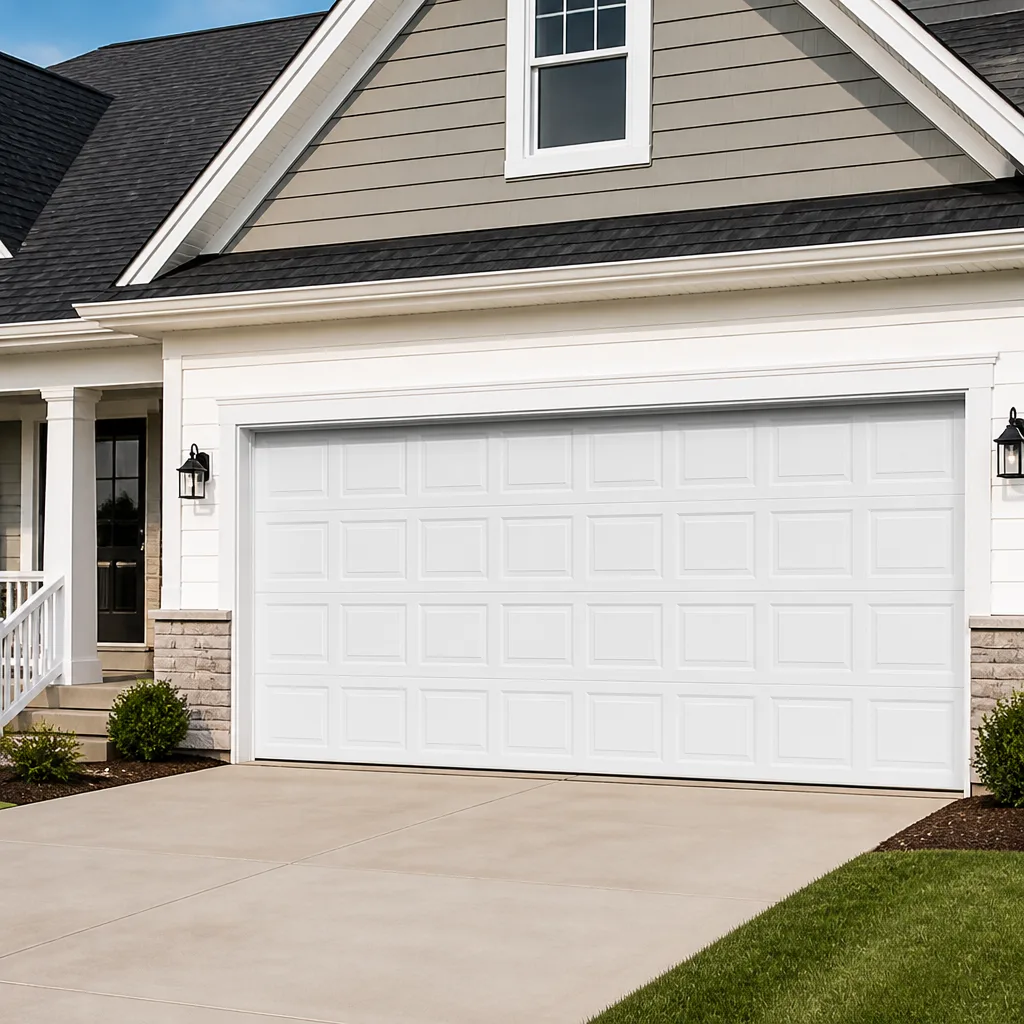 Raised-panel steel
 Carriage house
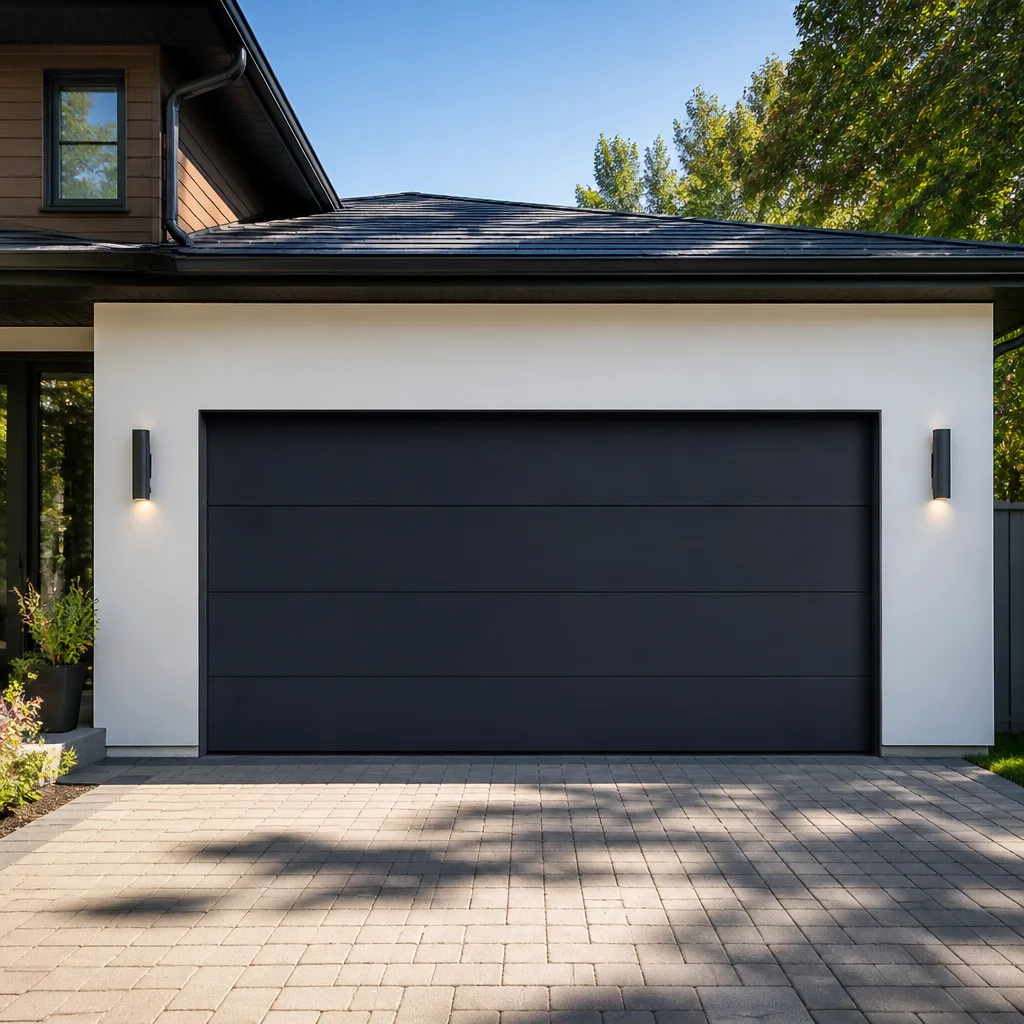 Modern flush
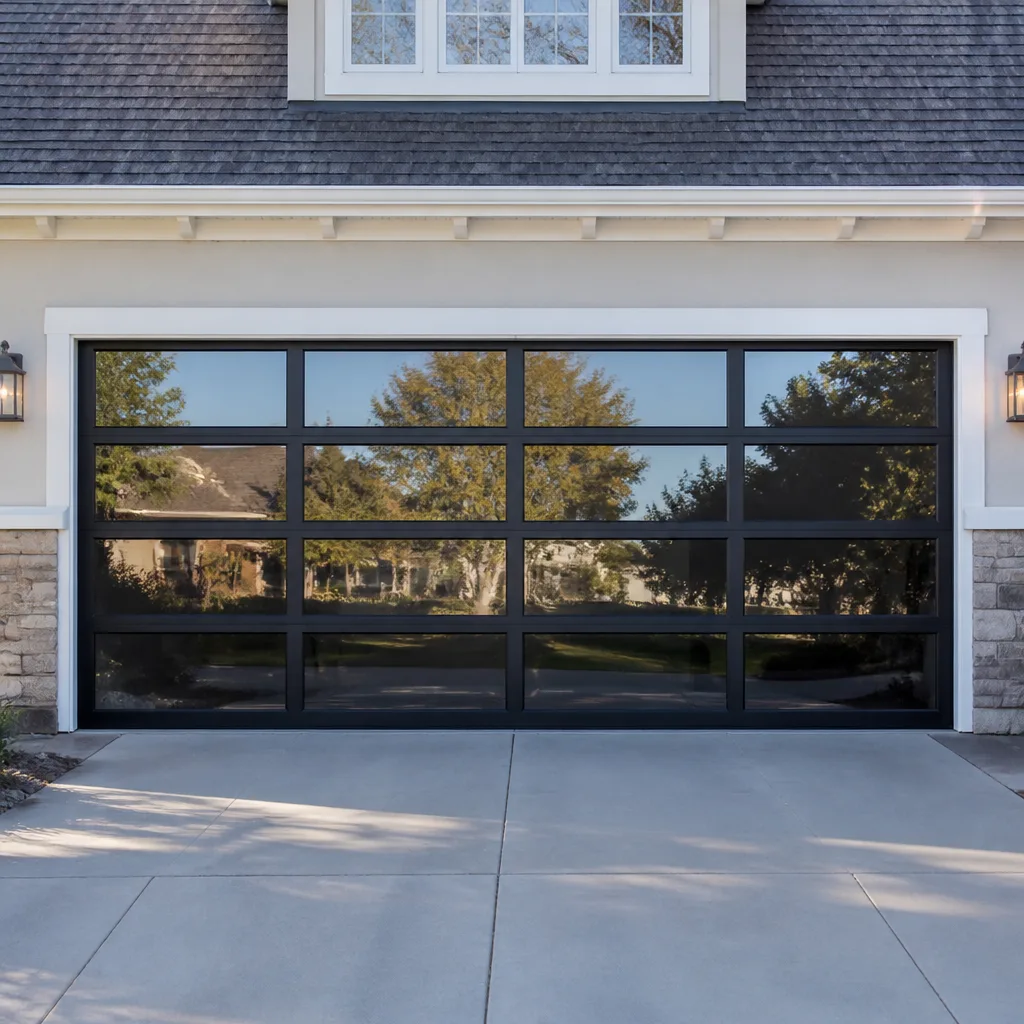 Full-view glass
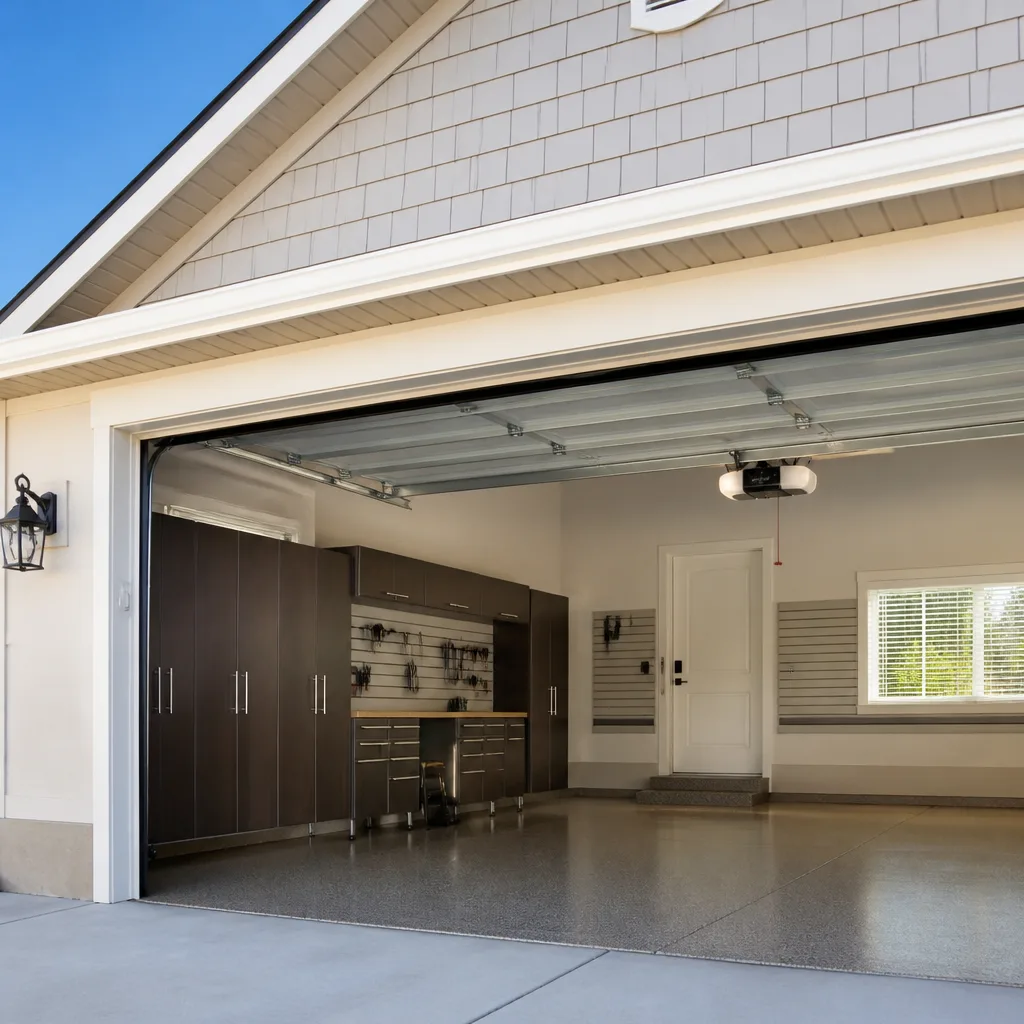 LiftMaster openers
 Chamberlain openers
Full 25-point door and opener safety check with every visit - springs, cables, rollers, tracks, and your LiftMaster or Chamberlain opener included
You get a price before we start. It does not change when the pro arrives.
Get your free estimateGarage Door Repair Maintenance Checklist for Boise City Homeowners
Most garage door advice you’ll find online was written somewhere humid, or somewhere that never freezes. Boise City is neither. We have dust that works its way into every moving part, summers that bake a door in direct sun, and freeze-thaw cycles that flex the whole system as the seasons turn. So the generic checklist mostly misses the point. What follows is a maintenance guide built around how garage doors actually fail here, season by season, and what you can check yourself in five minutes versus what deserves a proper inspection. Our technicians have up to experience working on doors in exactly these conditions, and the failures we see in Boise City follow patterns you can actually plan around. This guide walks you through them: the right lubricants, a two-minute balance test, weatherstripping checks for this climate, and when a repair is a job for a trained tech.
Quick Answer
A garage door maintenance checklist for Boise City should focus on three things: correct lubrication (a dry-film or silicone-based product, not a wet spray), a monthly balance-and-safety-reverse test, and an inspection of weatherstripping and moving parts every season to catch dust and freeze-thaw wear before it becomes a failure. In this climate, most door failures trace back to dried-out rollers, worn weatherseal that lets grit in, and springs that have cycled through years of temperature swings. A five-minute monthly check plus a fuller inspection each season keeps most doors working reliably and flags the problems that need a technician.
Styles & brands we work with
- Raised-panel steel
- Carriage house
- Modern flush
- Full-view glass
- LiftMaster openers
- Chamberlain openers
Table of Contents
- Why a Boise City Garage Door Checklist Is Different
- The Boise Garage Door Failure Calendar
- Choosing the Right Lubricant for High-Desert Conditions
- The Two-Minute Door Balance Test
- Weatherstripping Inspection for Dust and Temperature Swings
- The Five-Minute Monthly Check vs. the 30-Minute Seasonal Inspection
- When to Stop Checking and Call a Professional
Why a Boise City Garage Door Checklist Differs From a Generic One
A garage door is a mechanical system with dozens of moving parts, and every part responds to its environment. A checklist written for a coastal climate worries about salt and constant moisture. A checklist written for the South worries about heat and humidity together. Boise City has its own combination, and it changes through the year. In summer, the sun hits south- and west-facing garage doors with real force, and the metal panels and hardware expand. In winter, temperatures drop below freezing, and any grit or moisture that worked into a hinge or roller can stiffen things up. Between the two, the freeze-thaw cycle flexes the whole assembly repeatedly.
Then there’s the dust. Boise City sits in a high desert valley, and dust gets everywhere. It finds its way into the seams between door panels, settles on the tracks, and mixes with whatever lubricant is already there to form a gritty paste that wears down rollers faster than clean running ever would. That’s why a maintenance routine built for this climate emphasizes cleaning and the right lubricant, not just “spray something on it.” The failure modes most common here are preventable with a schedule tuned to Boise’s seasons, and that’s the point of this checklist. A door that’s fine on a humid-climate schedule can still wear out early here if nobody’s paying attention to the dust and the dry film.
The Boise Garage Door Failure Calendar
In our experience, garage door components in Boise City tend to fail on a seasonal pattern. Knowing which parts are under the most stress at which time of year lets you check them right before they’re likely to give trouble, rather than after. This isn’t a perfect forecast, but it’s a useful way to think about the year.
Spring: Rollers, Tracks, and Settling
As the ground thaws and things shift, door tracks can go slightly out of alignment, and rollers that picked up grit over the winter start to bind. This is a good time to clean the tracks, check that the door runs smoothly and quietly, and look at the roller condition. Followers and hinges that got stiff in the cold months get a fresh application of lubricant.
Summer: Heat, Expansion, and Opener Stress
Boise summers push the hardware hard. Metal expands, panels can warp slightly under direct sun, and a south-facing door may run differently in July than it did in April. The opener motor works harder when a door’s rollers are dry, and that’s when we see motor and gear wear show up on older units. Watch for the door getting louder or slower. Check the opener’s reverse function, since heat can affect the force settings.
Fall: Weatherstripping and Seals Before the Cold
Before the first freeze, the bottom weatherseal and side seals matter more than any other time of year. A brittle or cracked seal lets cold air and grit in, and once grit gets into the door’s path, it wears the moving parts all winter. Inspect the seals, replace what’s cracked, and clear any debris from the tracks. The garage door repair we do most often in early fall tends to involve seals and weatherstripping for this exact reason.
Winter: Cold, Stiff Grease, and Spring Stress
The cold brings its own problems. Lubricants that get gummy when it’s cold can make the door stiff, and that resistance puts extra load on the opener. Springs that have cycled through hundreds of open-and-close cycles in temperature swings get to the end of their service life, and a break often happens in the colder months. Any door that starts to sound like it’s laboring when it’s cold is telling you to check the lubrication and the balance.
Choosing the Right Lubricant for High-Desert Conditions
Here’s the mistake we see more than any other in Boise City: someone lubricates a garage door with whatever spray can is in the garage, usually WD-40. That’s a light penetrating oil, not a lubricant for the job, and it does the opposite of what a door needs. It goes on wet, collects dust, and evaporates or films off, leaving the moving parts drier than before. In a dusty high-desert climate, a wet lube that collects grit is worse than none at all, because that grit acts like sandpaper inside every roller and hinge.
What works here is a product that goes on and then stays clean and dry. Silicone-based spray lubricants and white lithium grease (used sparingly) are the right choices for most garage door hardware in this climate. The difference between a humid climate and ours matters: in a humid place, a heavier oil might be fine because moisture is the enemy. In Boise City, dust and grit are the enemy, so a dry-film or silicone lube that doesn’t hold on to dirt is the better rule. The rollers, hinges, and the pivot points are what you lubricate; the tracks themselves stay dry and clean, since a lubed track just collects dust.
- Use: Silicone-based spray lubricant, applied to rollers, hinges, and pivot points.
- Use sparingly: White lithium grease for heavier hinge wear points.
- Skip: Wet oils and spray-on penetrating products that collect dust.
- Never: Lubricate the tracks themselves, which should be wiped clean and left dry.
- Wipe first: Clean off old, gritty residue before applying anything new.
Whatever you use, the product matters less than the schedule and the method. A small amount applied to the right points, at the right intervals, does more than a heavy coat applied once. If you’re not sure what a part needs, that’s a good moment to ask a technician. We work on the brand you already have, and the lubricants we use are chosen for the same dry, dusty conditions that make a door loud in Boise City.
The Two-Minute Door Balance Test
You can learn more about the health of a garage door’s springs in two minutes than from any visual inspection. The balance test tells you whether the springs are doing their share of the lifting, or whether the opener is straining to carry more load than it should. Here’s how to do it safely.
- Disconnect the opener. Pull the release handle (usually the red rope) so the door runs by hand only, and make sure no one is in the path of the door.
- Raise the door slowly to about waist height by hand, then stop and let go.
- Watch what happens. A properly balanced door stays where you leave it, roughly in place.
- Interpret the result. If the door sinks or closes under its own weight, the springs have lost tension and need adjusting or replacing. If it drifts upward on its own, the springs are too tight.
A door that fights you all the way up, or drops the moment you let go, is a door whose springs need attention. That’s the early warning. Springs don’t usually announce themselves before they break; they wear gradually, and the balance test catches the wear before the failure.
A safety note on springs. We’re not going to tell you how to adjust or replace a torsion spring, because those springs and the cables under tension are the most dangerous parts of the system and have caused serious injuries. A door that fails the balance test is a signal to call a trained professional for spring repair, not to reach for a winding bar yourself. We adjust and replace springs as a standard part of our garage door repair work, and in our experience, one bad spring is usually part of a matched pair, so a pair is typically replaced together. On cost: a single spring repair is typically priced by written estimate for your door, and a matched pair runs about twice a single spring because both are replaced. The written estimate sets the final price, and you’ll have it before any work starts.
Weatherstripping Inspection for Dust and Temperature Swings
In a dusty, freeze-thaw climate, weatherstripping does more work than people give it credit for. It’s the first line of defense against grit getting into the door’s path, and it also keeps out cold air in winter and hot air in summer. When it’s brittle, cracked, or missing from the bottom and sides of the door, you get a door that’s harder to seal, more dust inside the garage, and a lot more wear on the moving parts. The bottom seal, the side seals, and the top of the door all take the hit.
Inspect the seals by running your hand along them and looking for cracks, hard spots, and gaps. A bottom rubber that’s cracked or has taken a permanent flat shape needs replacing, and it’s a low-cost part that protects everything above it. The side seals on many doors are the first to go, since they face the most sunlight and dust. The panel seams and the window seals on the garage door itself are worth a look too, because water and grit work into those seams over the seasons.
- Bottom seal: Check for cracks and a permanent flat spot; replace when stiff.
- Side seals: Look for gaps and brittleness, especially on sunny sides.
- Panel seams: Dirt and grit collect here; clean out before it works deeper.
- Window seals: Small cracks let water into the panel, so keep them sealed.
- Door threshold: Clear grit and debris from the ground so the door seats properly.
Replacing weatherstripping is one of the jobs that’s genuinely straightforward, and doing it before winter pays off. We work on the major brands, including Raynor and Craftsman doors, and new seals are the same on any brand: the job is measuring the openings and matching the profile. If a seal job turns into something more because the door is out of square or the tracks are out of alignment, that’s where a technician makes the difference.
The Five-Minute Monthly Check vs. the 30-Minute Seasonal Inspection
People skip maintenance when it feels like a big job. So break it into two tiers. The monthly check takes five minutes and catches the obvious stuff. The seasonal inspection takes about half an hour and gets at the failure modes a quick glance misses. Here’s what belongs in each.
The Five-Minute Monthly Check
- Run the door up and down once and listen. Any new grinding, squealing, or banging is a signal.
- Test the safety reverse. With the door closing, wave an object in its path; it should reverse immediately. Also test the photo-eye sensors by blocking the beam.
- Look at the tracks for obvious debris, dents, or bends, and wipe out the visible grit.
- Glance at the rollers and hinges for anything loose or missing.
- Note how the door sounds compared to last month. Changes in sound are the cheapest early warning you get.
The 30-Minute Seasonal Inspection
- Do the five-minute checks first.
- Do the two-minute balance test with the opener disconnected.
- Lubricate rollers, hinges, and pivot points with the right product for this climate.
- Inspect weatherstripping at the bottom, sides, and top, and check the panel seams.
- Check the hardware: tighten any bolts that have worked loose, and look at the brackets and the door’s connection at the opener arm.
- Open the opener housing if you’re comfortable doing that, and check the drive belt or chain and gear for wear.
- Clear the area around the door and the tracks of anything that could interfere, and confirm nothing stored in the garage is crowding the door’s path.
- For a LiftMaster or Chamberlain opener, check the force settings and test the remote and wall control so you’re not surprised by failure later.
That’s the split. The monthly check is about catching changes early. The seasonal inspection is where you actually get ahead of the failure calendar. Neither involves adjusting springs or cables, which is the one part of the system we recommend leaving to a trained professional in every case.
When to Stop Checking and Call a Professional
There are a few conditions where a maintenance check should stop and a call should start. A broken spring is the obvious one: you’ll hear a loud snap, the door won’t lift, and the opener will run without moving it. Damaged or visibly frayed cables on the side of the door are another, since a cable under tension is dangerous to touch. A door that comes off its track, hangs crooked, or won’t close all the way is a call, not a project. And opener problems that persist after checking the remote, the sensors, and the power are worth a technician’s diagnosis rather than further guesswork: the motor, gear, or logic board needs the right tools and parts to sort out.
If you’re in Boise City and you’ve done the balance test and the door still laboring or failing, that’s the moment. Arbor Garage Door Repair offers free estimates in Boise City. Call (833) 467-9147. We answer 24/7. Fast dispatch from 7am to 7pm, Sunday through Friday, and when a door fails outside those hours we book it into the next opening. Our technicians have up to experience, and we’re a dedicated garage door specialist, so the person on your door does this every day.
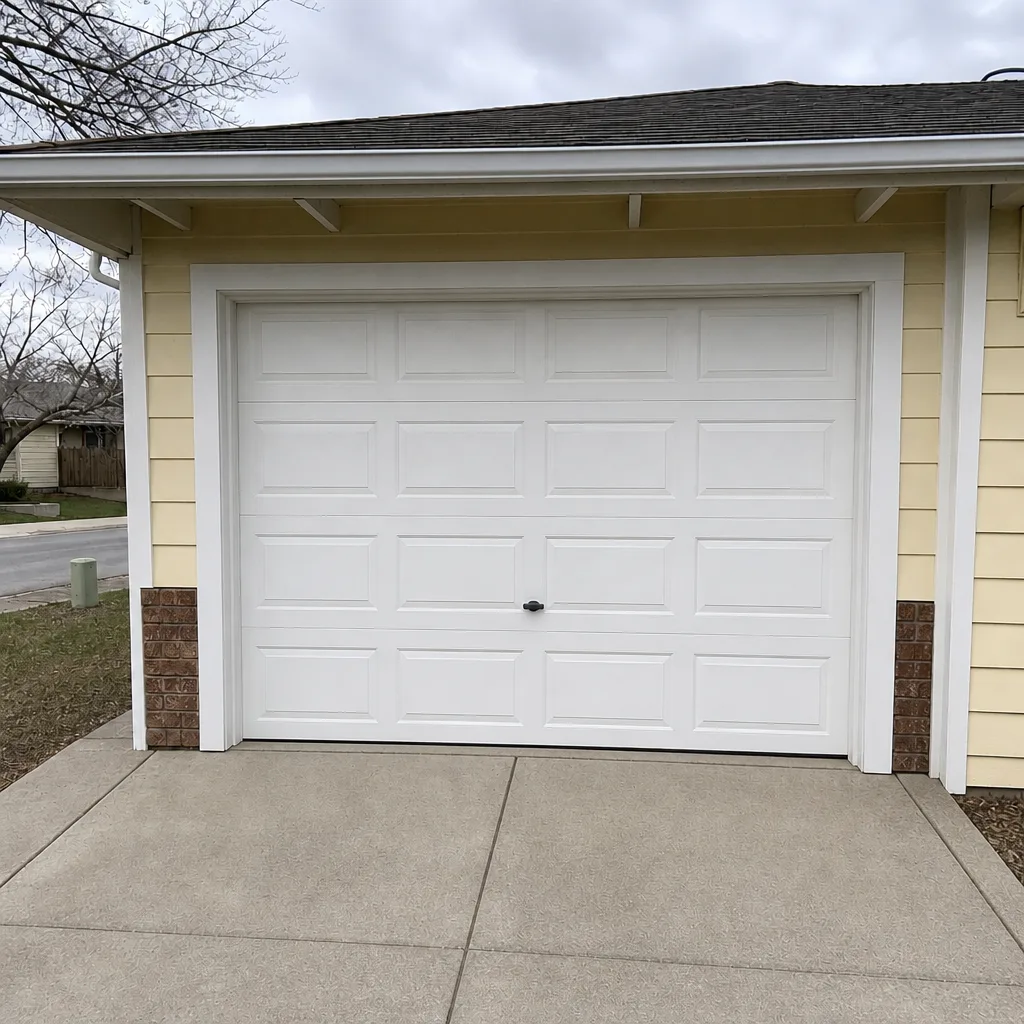
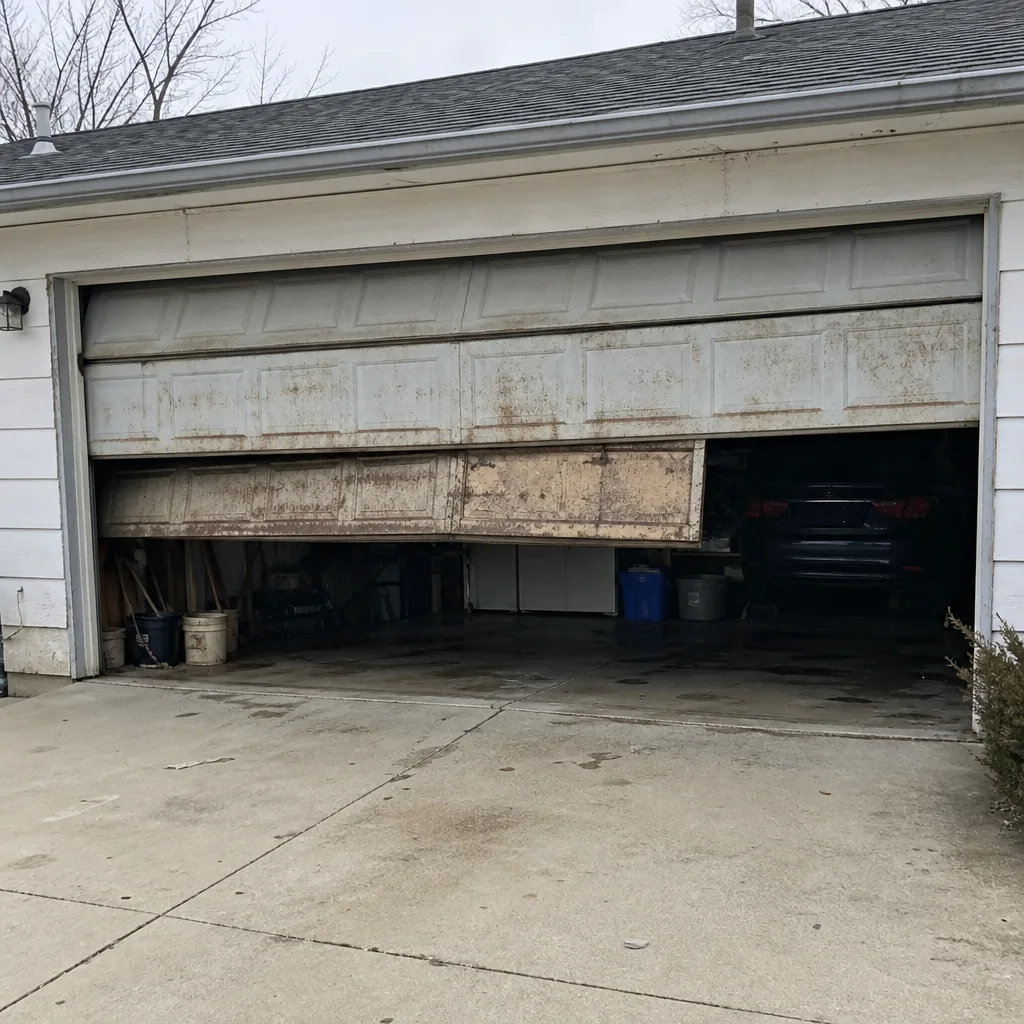
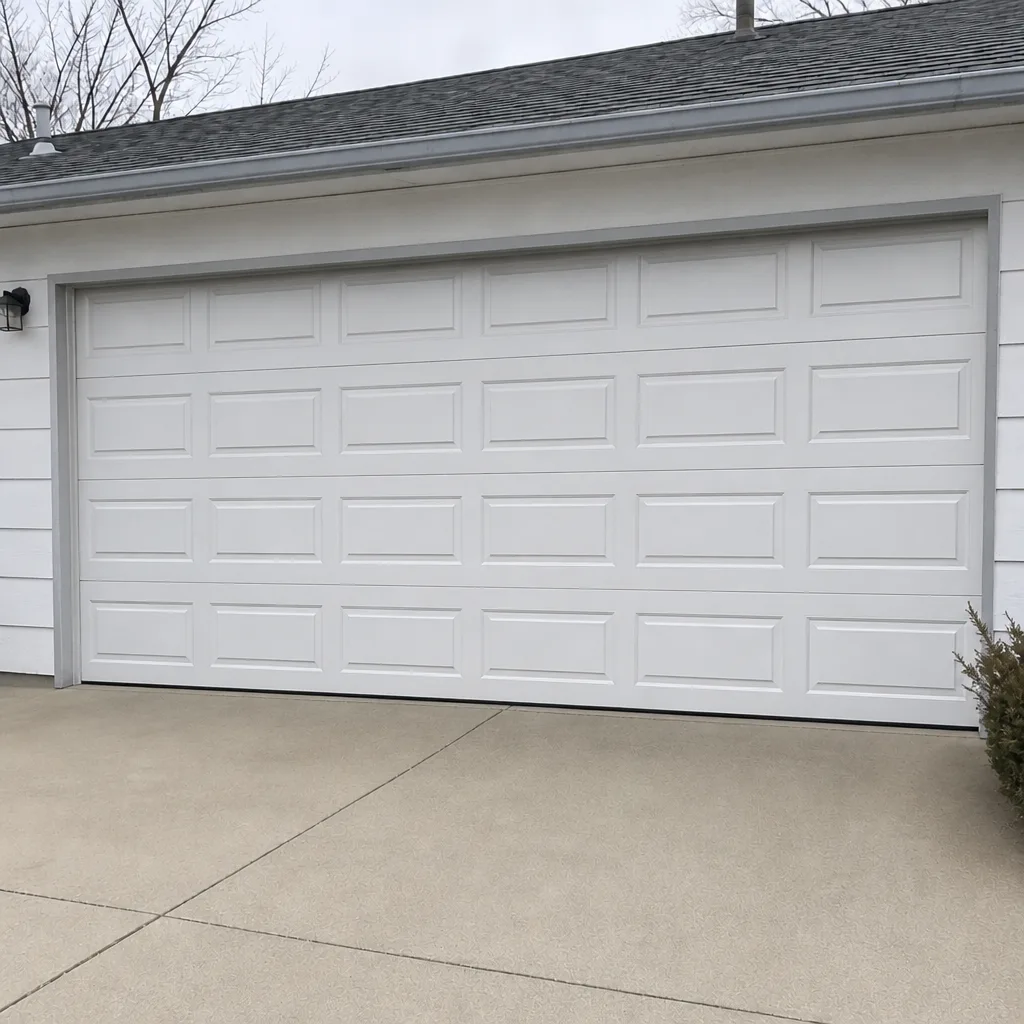
See the difference
 Before
 After
 Before
 After
 Before
 After
Common Mistakes to Avoid
- Using WD-40 as a lubricant. It’s a penetrating oil, not a garage door lubricant, and in Boise City’s dust it collects grit into a sticky paste that wears things out faster. Use a silicone or dry-film lubricant instead.
- Lubricating the tracks. A lubed track just becomes a dust magnet. The tracks should stay clean and dry, not slick.
- Skipping the balance test. Most door problems start with spring wear, and the balance test is the only easy way to catch it. A door that won’t stay put when you let go is telling you something.
- Treating weatherstripping as cosmetic. Here it’s a dust and temperature barrier. A cracked bottom seal lets grit into the mechanism and costs more in wear than the seal costs to replace.
- Forgetting the freeze-thaw cycle. What looks fine in July can bind in January. Check the door’s operation after the first cold snap and again after the heat arrives, because this climate swings hard.
- Trying to adjust or replace springs yourself. The high-tension springs and cables are the most dangerous parts of the door. That work belongs with a trained technician, without exception.
- Ignoring a new noise. A new squeak or rattle in a Boise City door is usually the first sign of a part that’s drying out or wearing. Catching it at the squeak stage is cheaper than catching it at the failure stage.
Frequently Asked Questions
Lubricate the rollers, hinges, and pivot points about once a season, and more often if you notice the door getting loud or dry. Boise City’s dust makes lubrication more important here than in humid climates, because dry parts wear faster when grit is around. Use a silicone or dry-film lubricant, and leave the tracks clean and dry. If you’re not sure what a part needs, call (833) 467-9147. Estimates are free.
Disconnect the opener, raise the door to waist height by hand, and let go. A balanced door stays roughly in place. If it drops or sinks, the springs have lost tension and need a professional. Never adjust the springs yourself; that’s a job for a trained technician. Call (833) 467-9147 for a spring check.
No. WD-40 is a penetrating oil, not a garage door lubricant, and it strips the protective coating off springs and collects dust in this climate. Use a silicone-based or dry-film lubricant on the moving parts instead, and keep springs clean. If a spring is already rusty or the door is out of balance, call (833) 467-9147 for an estimate.
Cold makes lubricant stiff and metal contract, so a door that ran quietly in summer can get loud and sluggish in winter. In most cases the fix is cleaning off old grit and re-lubricating the rollers and hinges with a product that stays effective in the cold. If the door is also slow or the opener strains, the door may be out of balance and need a technician. Call (833) 467-9147 to talk it through.
Usually, yes. Springs on most doors come in a matched pair, and when one goes the other is typically at the same stage of wear. Replacing both at once avoids a second breakdown shortly after. We work on most major brands, including LiftMaster, Chamberlain, and Craftsman, so the right parts are matched to the door. The price is set per job by a written estimate; call (833) 467-9147 for a free one.
Check the bottom seal, side seals, and top of the door for cracks, hard spots, and gaps. A brittle or flat-bottomed seal lets dust and cold air in and wears the moving parts faster, so replace it before winter rather than after. Seals are straightforward, but if the door also runs badly, get the whole system looked at. Call (833) 467-9147 for an estimate.
The Bottom Line
Garage door maintenance in Boise City isn’t about a generic spray-and-go checklist. It’s about this climate: dust that collects in every moving part, temperature swings that flex the whole system, and freeze-thaw cycles that find weak spots. The three habits that matter most are the right lubricant (silicone or dry-film, never a wet penetrating oil or a lubed track), a monthly balance test that catches spring wear before it breaks, and a seasonal inspection that keeps weatherstripping and hardware ahead of the failure calendar. Five minutes a month, half an hour a season, and a call to a technician when something feels off. That’s the whole routine. If a check turns up a problem, Arbor Garage Door Repair is one call away, and we handle everything from the spring to the smart opener.
When you’re ready to have a professional look at it, call (833) 467-9147 for a free estimate. We’re your Boise City garage door specialist, focused on garage door opener repair and full installation as well, so one team can handle the whole system.
Written by the team at Arbor Garage Door Repair.